
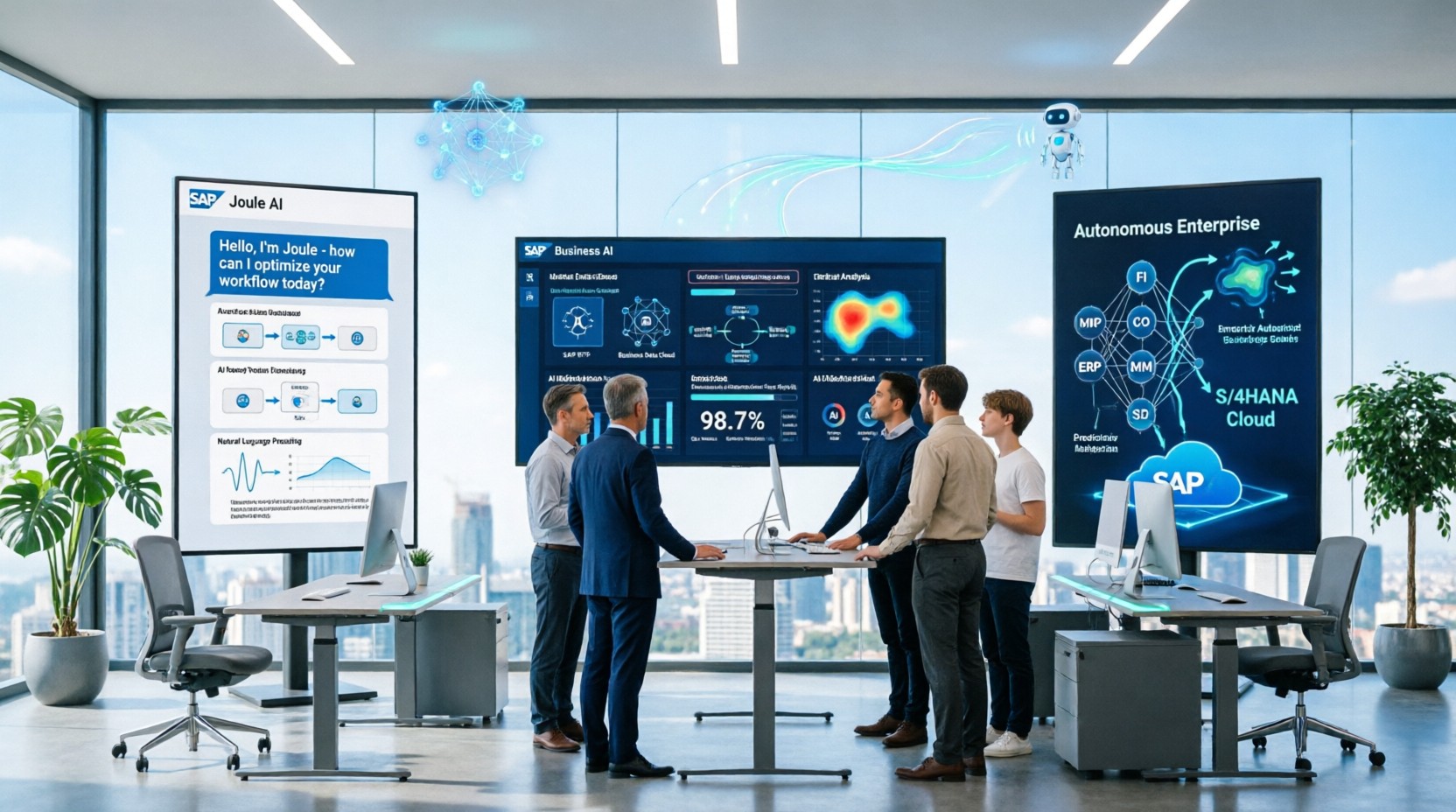
SAP transformation is entering a new phase.
For years, ERP programmes have centred on implementation, migration, integration, testing, process redesign and post-go-live support. These disciplines remain essential. But as SAP embeds artificial intelligence directly into its core business applications, both companies and consultants need to approach ERP transformation with a broader lens.
At SAP Sapphire 2026, SAP outlined its vision for the “Autonomous Enterprise” — AI woven into business processes, data and governance. It also unveiled the SAP Business AI Platform, which unifies SAP Business Technology Platform, SAP Business Data Cloud and SAP Business AI into a single governed environment for enterprise use.
The practical implication is significant: AI is no longer a standalone innovation initiative. It is becoming integral to how SAP systems support decision-making, automate workflows and drive day-to-day operations.
AI Is Moving Closer to the ERP Core
A clear example of this shift is Joule, SAP’s AI assistant and agent layer.
Joule enables users to interact with SAP systems in a conversational, task-oriented way, drawing on business context from data, roles and processes.
For organisations, this unlocks new possibilities across finance, procurement, supply chain, HR, analytics and operations. Rather than positioning AI as a separate tool outside the ERP environment, SAP is building AI capabilities that are natively connected to the business system itself.
One point, however, cannot be overstated: AI within SAP delivers value only when the ERP foundation is solid.
Poor data quality, undefined processes, weak governance or fragmented system landscapes will constrain the value of any AI capability. This is precisely why data migration, master data management, integration and process design are becoming even more critical within SAP S/4HANA programmes.
What This Means for SAP Professionals
Market expectations for SAP professionals are evolving accordingly.
Deep expertise in SAP FI/CO, MM, SD, PP, HCM, SuccessFactors, ABAP, Basis, BW, BTP and integration remains highly valuable. But the professionals who stand out will be those who connect module expertise with a broader transformation perspective.
Those who understand S/4HANA, data quality, clean core principles, automation, analytics and AI readiness will be in increasing demand.
This does not mean every SAP consultant must become an AI engineer. It does mean SAP professionals should understand where the ecosystem is heading and how AI will affect their area of expertise:
- A functional consultant who understands data implications becomes more valuable.
- A data migration specialist who understands business processes becomes more valuable.
- A project manager who understands ERP delivery, governance and AI readiness becomes more valuable.
- An integration expert who connects SAP and non-SAP systems without adding unnecessary complexity becomes more valuable.
What Companies Should Consider
For companies, the lesson is equally clear.
SAP AI will not eliminate the need for experienced consultants. If anything, it heightens the need for people who understand the realities of large-scale transformation projects.
ERP programmes involve legacy systems, local requirements, business users, deadlines, compliance obligations, data inconsistencies and operational pressure. Technology provides better tools — but project success still depends on having the right team.
Before introducing AI into an SAP landscape, companies should critically assess their data quality, process design, integration architecture, governance model and support structure.
The organisations that build these foundations properly will be far better positioned to capture the value of SAP’s new AI capabilities.
Are you an SAP, ERP, Data or AI professional?
Join the EVVAS consultant network and send us your CV.